

How Personalized Physical Therapy Helped a Patient Recover After Shoulder Surgery
Recovering from a reverse shoulder replacement takes more than simply showing up to physical therapy appointments. It requires a treatment plan that's tailored to your goals, careful progression, and a physical therapist who understands how to restore both movement and confidence.
Recently, one of our patients shared his experience after transitioning to Corrective Physical Therapy following treatment at a larger physical therapy clinic.
"Matt Brown is a phenomenal physical therapist. He took me as a patient after going to a large multi-site PT mill. Everyone in there was with 'techs' and no personalized professional guidance. Matt stays with you, focuses on the specific movements necessary to get back to life after reverse shoulder surgery. I'm not a hearts and flowers guy but Matt has proven he is at the top of his game. My Orthopedic surgeon has also been impressed with my movement since going to Matt. Thanks Buds!"
While every patient's recovery is unique, this case is a great example of how personalized physical therapy can make a meaningful difference after shoulder surgery.
The Challenge: Recovering After Reverse Shoulder Replacement
Following reverse shoulder replacement surgery, this patient was experiencing the common challenges many people face:
Limited shoulder range of motion
Stiffness and discomfort
Decreased strength
Difficulty performing everyday tasks
Trouble completing work-related overhead movements
Rather than focusing only on general exercises, the goal was to restore the movements that mattered most to his daily life.
A Comprehensive Evaluation
Every treatment plan at Corrective Physical Therapy begins with a thorough assessment.
For this patient, Dr. Matt evaluated:
Shoulder range of motion
Functional movement patterns
Strength deficits
Mobility restrictions
Activities that were limiting his return to work and everyday life
Understanding these factors allowed treatment to focus on the root causes of his limitations instead of simply treating symptoms.
If you're experiencing shoulder pain or recovering from surgery, a detailed evaluation is the foundation of effective care. Learn more about our approach to shoulder rehabilitation on our Shoulder Pain Physical Therapy page.
Restoring Mobility with Hands-On Treatment
Because stiffness and restricted mobility were significant barriers, treatment included several evidence-based techniques designed to improve movement and reduce discomfort.
These included:
Manual joint stretching
Laser therapy to support tissue healing and reduce inflammation
These hands-on treatments helped improve mobility while preparing the shoulder for more active strengthening exercises.
Building Strength Through Progressive Loading
Once mobility began improving, rehabilitation shifted toward rebuilding strength safely.
Rather than jumping into difficult exercises too quickly, Dr. Matt progressively loaded the shoulder through active ranges of motion in every direction. This gradual progression allowed the shoulder to adapt while minimizing unnecessary irritation.
Progressive loading is one of the most important components of long-term recovery because it helps restore strength, endurance, and confidence for everyday activities.
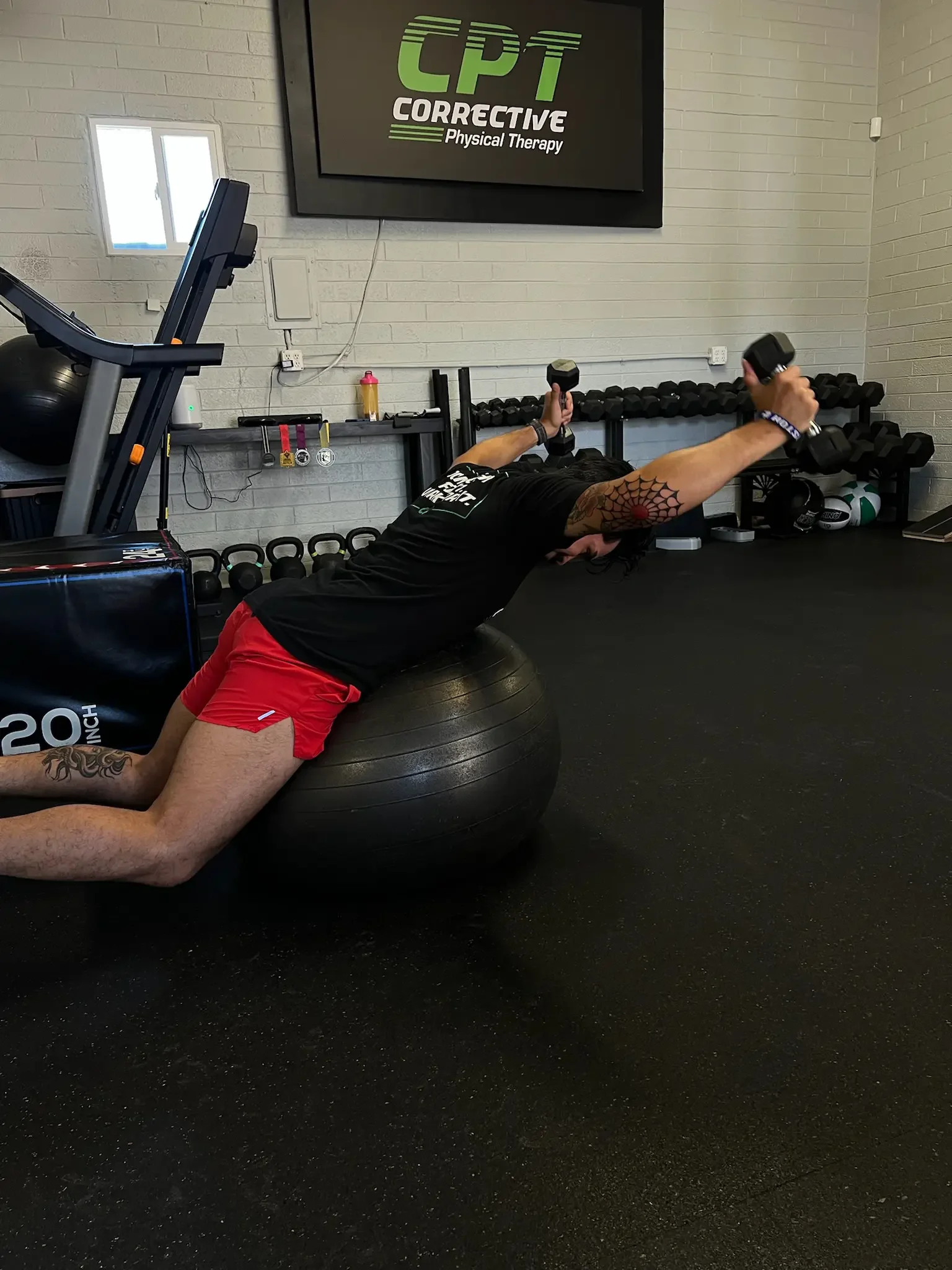
Should Rehab Built Around Real-Life Goals
One of the biggest differences in this case was that the shoulder rehab wasn't built around generic exercise sheets. It was built around the patient's life.
His biggest goals included:
Putting on his belt comfortably
Lifting weight overhead
Performing work-related tasks without limitation
Each exercise and progression was selected to improve the specific movements he needed outside the clinic. This functional approach helps patients return not just to exercise, but to the activities that matter most.
Recovery Doesn't Stop Between Appointments
An individualized home exercise program was another key component of his success. Instead of relying solely on visits to the clinic, Dr. Matt developed a progressive home program that complemented each stage of rehabilitation. This allowed the patient to continue making meaningful progress between appointments while reinforcing the gains made during therapy sessions.
Consistency inside and outside the clinic is often one of the biggest predictors of successful outcomes.
The Result
By combining individualized assessment, hands-on treatment, progressive strengthening, and functional goal-setting, this patient regained his shoulder mobility and function after reverse shoulder replacement surgery.
Perhaps the most rewarding feedback came not only from the patient, but from his orthopedic surgeon. The patient shared with us that his surgeon was impressed by the quality of his movement throughout recovery.
Personalized Physical Therapy Makes the Difference
Every recovery is different, but one thing remains consistent: personalized care matters.
At Corrective Physical Therapy, you'll work one-on-one with a licensed physical therapist throughout each visit. Your treatment plan is designed around your specific goals, your progress, and the activities you want to return to. We don’t believe in a one-size-fits-all protocol.
Whether you're recovering from shoulder surgery, dealing with ongoing shoulder pain, or trying to get back to work, sports, or everyday life, our team is here to help you move with confidence again.
Ready to start your recovery? Contact Corrective Physical Therapy today to book an appointment and receive a treatment plan built specifically for you.
