


Neck Pain & Cervical Stiffness Physical Therapy in Scottsdale & Arcadia
1-on-1 Physical Therapy for Neck Pain & Cervical Stiffness in Scottsdale & Arcadia
Athletes, first responders, and active adults who have been dealing with neck pain, stiffness, or tension headaches that won't go away no matter how much they stretch or adjust their posture...we got you.
At Corrective Physical Therapy in Scottsdale and Arcadia, we find the root cause of neck pain and cervical stiffness and build a plan to fix it, so you can move freely, train without restriction, and stop waking up feeling like your neck belongs to someone else.
Why Neck Pain Keeps Coming Back
Something we try and educate our patients on before sending them home with just another round of stretches…Neck pain is rarely just a neck problem.
The cervical spine doesn't work in isolation. It works in coordination with the thoracic spine, the shoulder blades, the deep neck flexors, and the muscles of the upper back. When any part of that system breaks down, the neck ends up absorbing more stress than it can handle.
Chronic stiffness is one of the most misunderstood symptoms we see at CPT. When your neck feels perpetually tight, the instinct is to stretch it. But stiffness is often the body's way of creating stability around a joint it doesn't feel confident controlling. Stretching without addressing the underlying weakness gives the body no reason to relax. It just tightens back up because nothing has changed.
The same goes for posture. Research no longer supports a direct cause and effect relationship between poor posture and neck pain. But here's what posture does affect: the strength and length of the muscles surrounding the cervical spine. Rounded shoulders and a forward head position create lengthened, weakened muscles in the back of the neck and shortened, overworked muscles in the front. Both sides need to be addressed, but for different reasons. And neither gets fixed by sitting up straighter.

That's why treating neck pain effectively requires more than a generic stretching routine or postural correction advice.
What's Actually Driving Your Neck Pain
At CPT we see a few patterns consistently in patients dealing with neck pain and cervical stiffness:
-
Forward head posture and deep neck flexor weakness
Forward head posture and deep neck flexor weakness is one of the most common contributors to chronic neck pain, tension headaches, and upper back tightness. Every inch the head moves forward adds approximately 10 pounds of force to the cervical spine and upper back. Over the course of an eight-hour workday, that accumulates into significant stress on the joints, muscles, and discs of the neck.
-
Suboccipital tightness
Suboccipital tightness develops when the small muscles at the base of the skull are chronically shortened from prolonged forward head positioning. These muscles are a frequent driver of tension headaches and the kind of neck stiffness that makes turning your head feel like a project.
-
Thoracic mobility restrictions
Thoracic mobility restrictions limit how well the cervical spine can move and how efficiently load is distributed through the upper body. Stiffness in the mid back frequently shows up as neck pain, shoulder pain, or both.
-
Deep neck extensor weakness
Deep neck extensor weakness means the deeper muscles that help support your head and stabilize your neck aren't doing their job effectively. As a result, larger muscles in the neck and upper shoulders have to work harder to compensate, leading to muscle fatigue, tension, and the aching stiffness many people assume is simply a flexibility problem.
-
Cervical joint restrictions
Cervical joint restrictions from sleeping in a compromised position, a sudden movement, or accumulated postural stress can cause acute neck pain and dramatically limited range of motion in one direction. This is the classic "woke up and can't turn my head" presentation that responds well to targeted hands-on treatment and specific mobility work.
What Does Neck Pain Actually Feel Like?
Whether your neck pain came on suddenly from sleeping wrong, built up gradually from years of desk work, or keeps flaring up with training, treatment needs to be specific to you...not generic and not a checklist prescribed by someone who's never even met you.
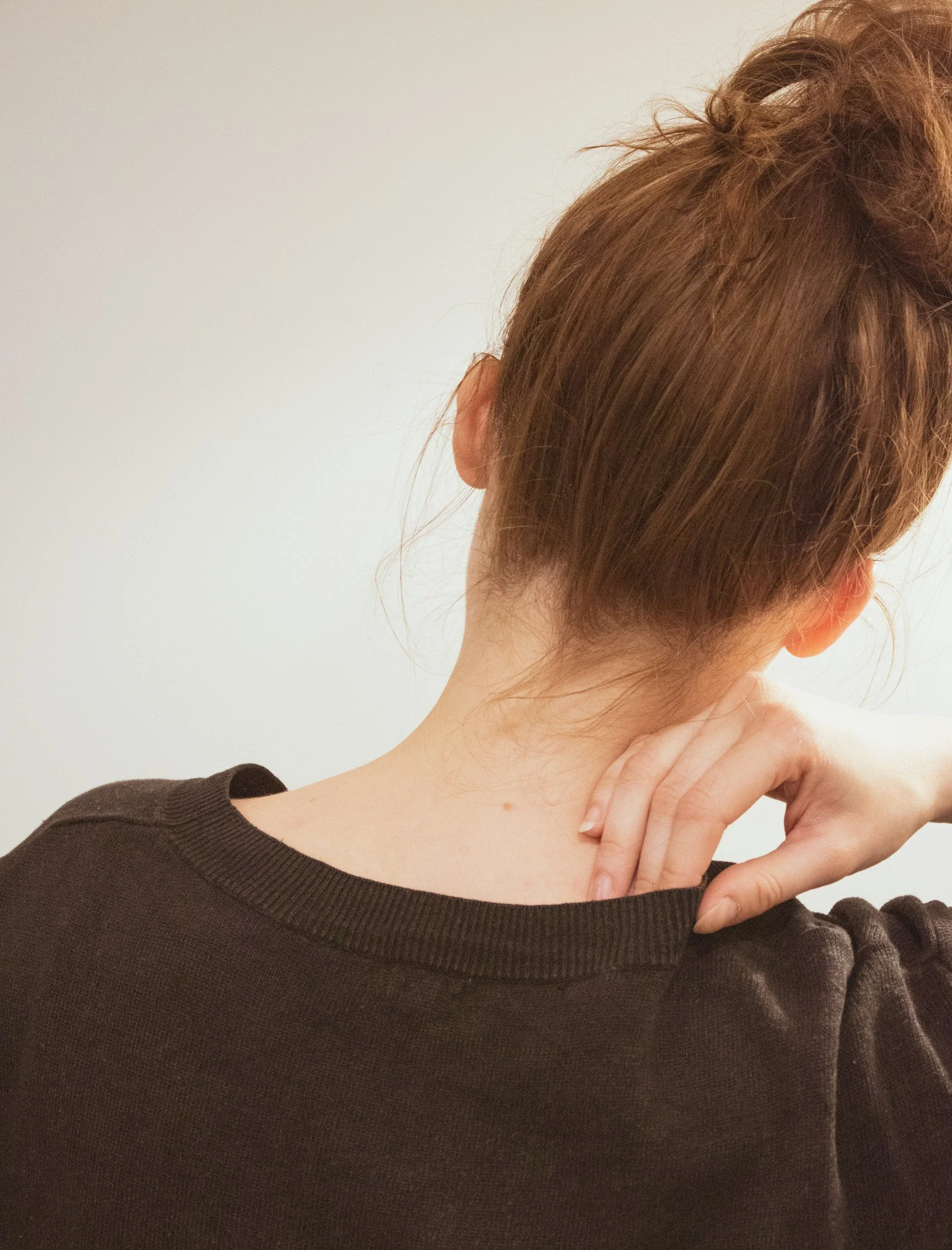
Symptoms vary depending on the cause and the person, but commonly include:
Stiffness or limited range of motion in one or both directions
Aching or tension across the base of the skull and upper traps
Tension headaches that start at the back of the head
Sharp pain with turning or extending the neck
Pain that wakes you up or is worse in the morning
Neck tightness that builds throughout the day at a desk
Tingling, numbness, or nerve pain into the arm or fingers
Upper back and shoulder pain linked to cervical stiffness
Pain that keeps returning despite regular stretching
Our Approach to Neck Pain & Cervical Stiffness Treatment
At Corrective Physical Therapy, every session is 1-on-1 with a licensed Doctor of Physical Therapy. No aides. No rotating tables. No cookie-cutter exercise handouts.
We start by assessing how your cervical spine moves, where restrictions and weakness exist, how your thoracic spine and shoulder blades are contributing, and what's driving the pattern. From there, we build a plan.
Depending on your presentation, your treatment may include:
-
Manual Therapy & Hands-On Treatment
Targeted hands-on work to restore cervical and thoracic joint mobility, reduce muscular tension in the neck and upper back, and improve movement quality. For acute presentations like a cervical joint restriction from sleeping wrong, hands-on treatment can produce significant relief quickly by restoring motion to a joint that has locked up.
-
Deep Neck Flexor/Extensor Strengthening
The chin tuck and its progressions are foundational to neck rehab at CPT. Strengthening the deep neck flexors/extensors improves cervical support, reduces tension in the superficial neck muscles, and creates more space in the cervical spine for patients dealing with nerve pain or tingling into the arm. It's one of the most effective and most underutilized tools in neck pain treatment.
-
Cervical & Thoracic Mobility Work
We restore range of motion in the cervical spine and thoracic spine together, because they function as a system. Limited mid-back mobility is a frequent and overlooked contributor to chronic neck stiffness and shoulder pain.
-
Postural Strength & Endurance Training
Correcting posture isn't about telling someone to sit up straighter. It's about building the strength and endurance in the right muscles so the body can sustain better positioning without conscious effort. We address the deep neck flexors, mid-back extensors, and shoulder blade stabilizers as a coordinated system.
-
Suboccipital Release & Strengthening
For patients with tension headaches and upper cervical tightness, releasing the suboccipital muscles and then strengthening the neck in a lengthened position addresses both the symptom and the cause. Releasing tension without building strength is a short-term fix. We do both.
-
Movement Retraining
Movement retraining addresses the movement patterns and postural habits that are accumulating into pain, particularly for desk workers, first responders, and athletes whose sport places repetitive demands on the cervical spine.
-
Dry Needling
When appropriate, dry needling can reduce muscular tension in the neck, upper traps, and suboccipitals to improve movement quality and decrease pain sensitivity.
-
MLS Grade IV Laser Therapy
Advanced laser therapy to help reduce inflammation and support tissue healing during painful flare-ups or when irritability is limiting progress.
The Truth About Posture and Neck Pain
This is one of the most misunderstood topics in musculoskeletal health, and it's worth addressing directly.
Poor posture does not automatically cause neck pain. The research is clear on this. Plenty of people with significant forward head posture have no pain at all. Telling someone their posture is causing their pain and that they need to sit up straighter is an oversimplification that rarely helps anyone.
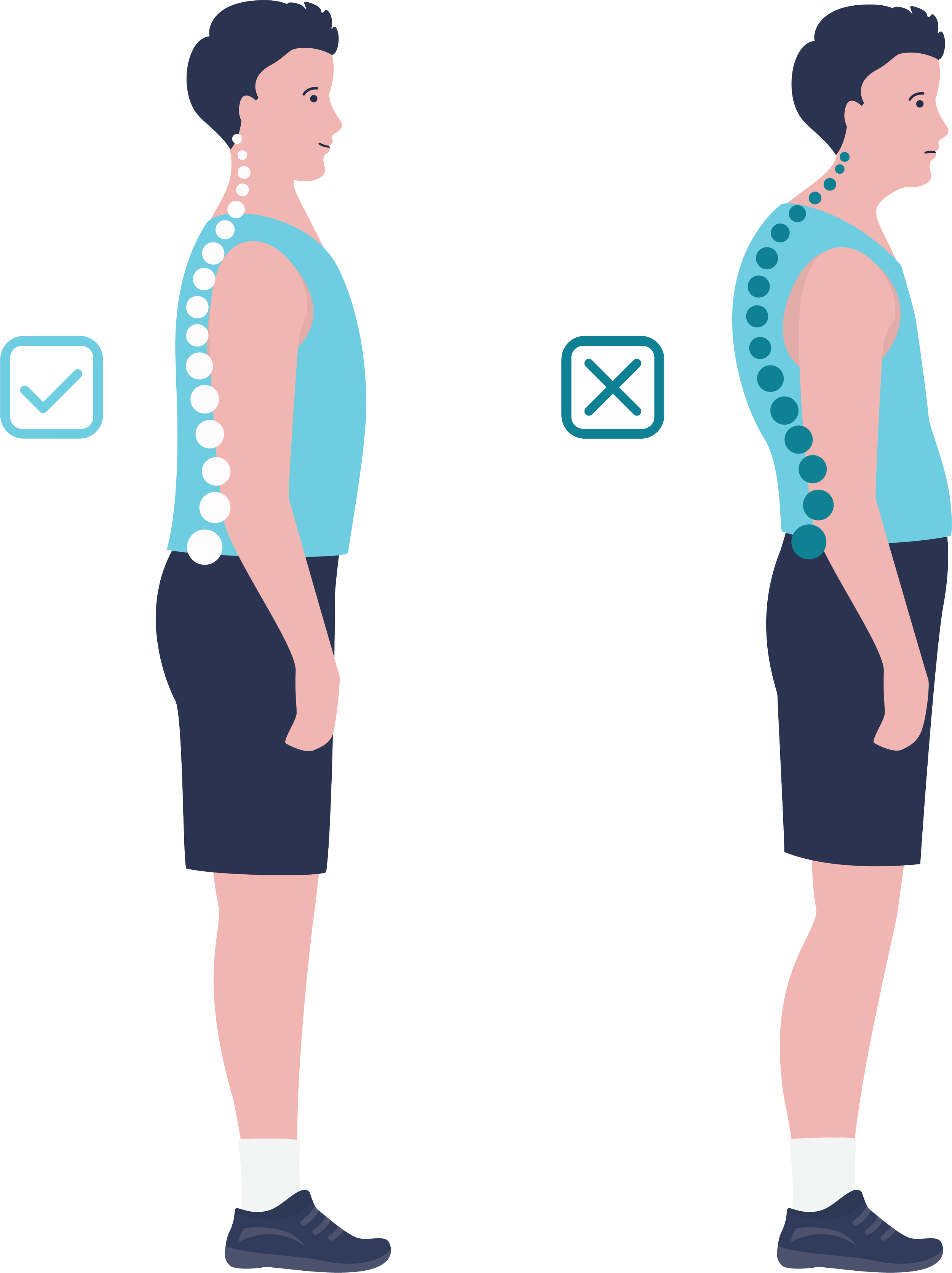
But here's what posture does affect: muscle length, muscle strength, and how load is distributed through the cervical spine over time. Kyphotic posture, where the upper back rounds forward and the head follows, creates shortened muscles at the front of the neck and lengthened, weakened muscles at the back. It limits the thoracic spine's ability to extend and rotate. And it makes certain movements progressively harder to perform over time.
Once pain is present, posture matters more. Positions that place additional stress on already irritated tissue will keep pain levels elevated. But the solution isn't postural correction in isolation. It's building the strength and mobility that allow the body to move freely and manage load efficiently in any position.
That's a meaningful difference, and it changes everything about how treatment is approached.
Neck Pain Exercises: What Actually Works [Videos]
Here are two movements we use consistently with patients dealing with neck pain, stiffness, and tension headaches:
Chin Tuck
Place two fingers on your chin and gently pull straight back, creating a double chin. Your head should not tilt down toward your chest. This should feel like you're lengthening the back of your neck, not compressing it. Hold for five seconds and repeat 10 times. This strengthens the deep neck flexors, improves cervical alignment, and creates space in the cervical spine for patients dealing with nerve symptoms or upper trap tension. It's simple, it can be done anywhere, and it is one of the most effective exercises for chronic neck pain and headaches driven by forward head posture.
Suboccipital Release into Strengthening
Place a foam roller or ball under the upper part of your neck, just below the base of the skull, and allow the suboccipital muscles to release with gentle pressure. Then place a resistance band across the top of your head and perform a chin tuck, pressing the back of your head into the band. This lengthens the tight structures at the base of the skull while simultaneously strengthening the neck in the position it needs to be strong in. Releasing tension without building strength is a temporary fix. This exercise does both.
Can Neck Pain Affect Your Low Back?
Yes, and more than most people realize.

Every inch the head moves forward from its neutral position adds approximately 10 pounds of compressive force to the cervical spine and upper back. For someone sitting at a desk or looking at a phone for hours a day, that force accumulates throughout the entire spine, including the low back.
If you're dealing with both neck pain and low back pain, the connection between cervical posture and lumbar load is worth assessing. At CPT, we look at the full picture, not just the area that hurts most.
Conditions We Treat Related to Neck Pain & Cervical Stiffness
Cervical joint restrictions and acute neck pain
Chronic neck stiffness and limited range of motion
Tension headaches and suboccipital pain
Forward head posture and deep neck flexor weakness
Cervical radiculopathy and nerve pain into the arm
Thoracic kyphosis contributing to neck symptoms
Upper trap tension and shoulder pain linked to cervical dysfunction
Desk worker neck pain and postural strain
Neck pain in athletes and first responders
Whiplash and trauma-related cervical pain
Patient Testimonials
I can’t recommend Matt enough. I came in with neck pain to the point I could barely move. Through a thoughtful, targeted approach, he helped me steadily regain mobility and strength. Matt uses techniques like laser therapy and dry needling, which made a big difference in my recovery. By the end of treatment, I had full, pain-free range of motion again, which I wasn’t sure was possible at the start. He takes the time to understand what’s going on, explains everything clearly, and makes you feel comfortable throughout the process. You’ll be in great hands with Matt.
— Ryan S.Matt and Madi did a damn good job working on my neck! There are both very kind and very knowledgeable in the physical therapy space. I would recommend them to anyone need to do any kind of physical therapy. I will be going back for them to help me my tight hips, and hamstrings back in shape after my injury.
— Brandon H.I have suffered from chronic back and neck pain for many years. After working with several different PT's and chiropractors, I finally found a physical therapist who has been able to help with my debilitating pain. Dr. Matthew Brown is truly one of the best physical therapists. He CARES and LISTENS. Hands down the best DPT I have ever met. His business is well kept, clean and the one on one sessions he offers makes it easy to move at your own pace and not feel rushed. 5/5 stars all around!!
— Mikayla A.Why Patients Choose Corrective Physical Therapy
Most physical therapy clinics are built for volume. You get 20 minutes with a therapist, get handed off to an aide, and go home with the same exercise sheet they've been handing out to everyone else since 1998.
That's not how we work.
What Makes CPT Different?

1-on-1 treatment sessions

Sports rehab expertise

¡Sí, hablamos español!

Full 60-minute evaluations

Focus on active adults and former athletes

Education that helps you understand your pain

Personalized rehab plans

Evidence-based treatment

Locations in Scottsdale & Arcadia
Physical Therapy for Neck Pain & Cervical Stiffness in Scottsdale & Arcadia, AZ
Corrective Physical Therapy provides personalized, 1-on-1 physical therapy for neck pain, cervical stiffness, tension headaches, nerve pain, and posture-related dysfunction in Scottsdale and Arcadia, Arizona.
Whether you're trying to get back to training, return to work without pain building through the day, or just turn your head without it being an event, our team is here to find what's actually driving the problem and build a plan to fix it for good.
Because at Corrective Physical Therapy… We don't fix fragile. We build resilient.

Meet the Doctors

Dr. Matthew Brown PT, DPT, SCS
Dr. Matthew Brown is a sports physical therapist who helps active adults and athletes recover from injuries, improve performance, and return to the activities they enjoy. As the founder of Corrective Physical Therapy, he combines advanced sports rehabilitation training with strength and movement-based treatment to address the root cause of pain and keep patients performing at their best.
Founder & Performance Specialist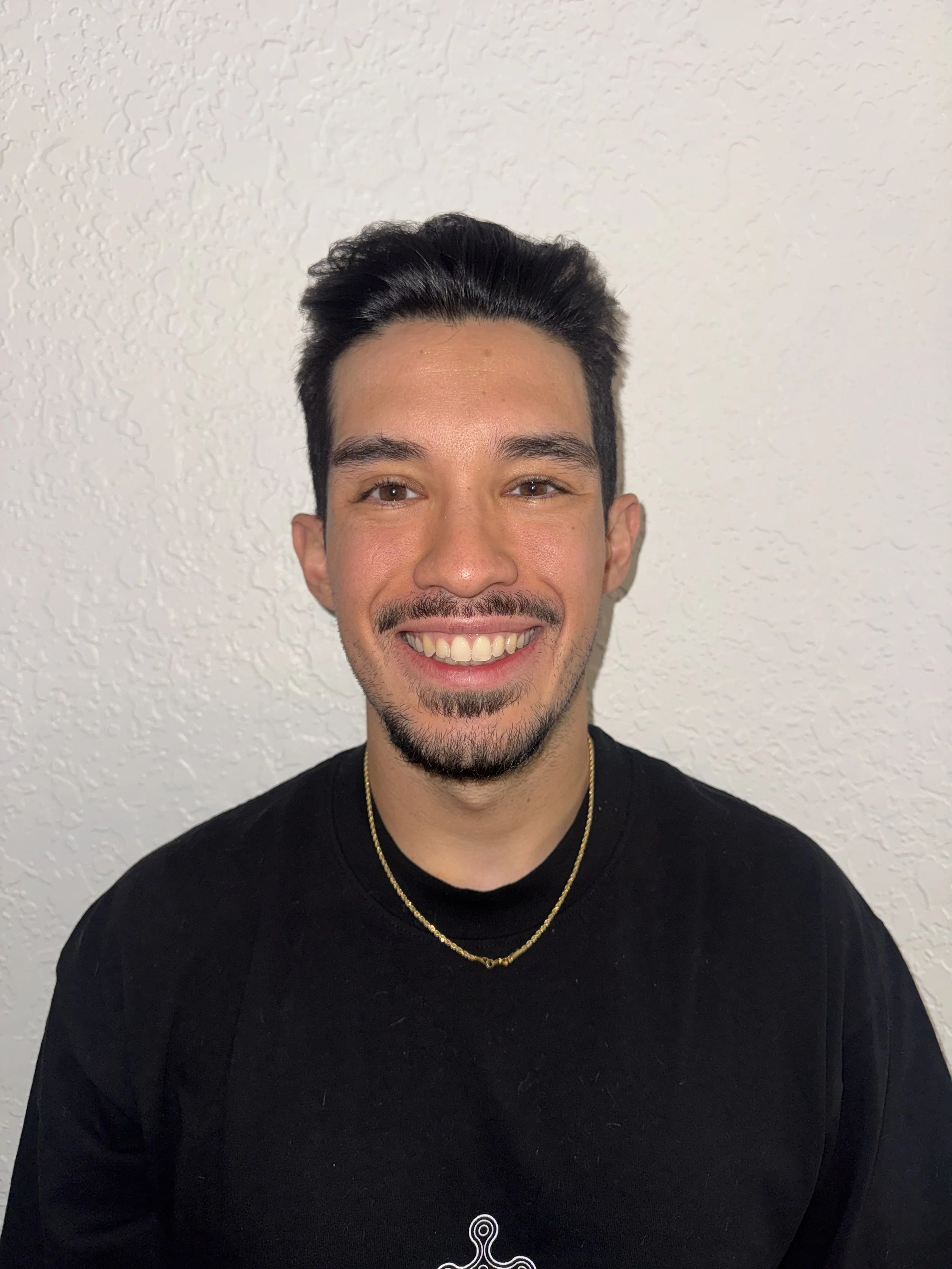
Dr. Daniel Paredes, PT, DPT, CSCS
Physical Therapist | Sports Performance & Running SpecialistDr. Danny Paredes is a sports physical therapist who helps runners, athletes, and active adults overcome pain, improve performance, and return to training with confidence. Combining his background in strength and conditioning, competitive athletics, and evidence-based rehabilitation, he bridges the gap between rehab and performance to help patients move better and achieve their goals.
Neck Pain & Cervical Stiffness FAQs
-
Most neck pain is mechanical in origin and responds well to physical therapy. However, symptoms like severe headache with sudden onset, weakness or significant numbness in the arms or hands, loss of coordination, or pain following trauma warrant prompt medical evaluation. If any of those apply, we'll refer you to the appropriate provider immediately.
-
Yes, frequently. Tension headaches driven by suboccipital tightness, forward head posture, and deep neck flexor weakness respond well to the combination of hands-on treatment, targeted strengthening, and cervical mobility work. Addressing the source of the tension rather than just managing the headache is what produces lasting results.
-
Stiffness is often the body's protective response to instability or weakness in the cervical spine. Stretching without addressing the underlying strength deficit gives the body no reason to release its grip. Building strength in the deep neck flexors and cervical stabilizers is usually what actually resolves chronic stiffness.
-
Yes. Cervical nerve irritation or compression can produce tingling, numbness, or weakness that travels down the arm and into the fingers. This is called cervical radiculopathy. A proper assessment helps identify whether the nerve symptoms are originating from the cervical spine, the thoracic outlet, or somewhere further down the arm.
-
Ergonomics can contribute, but they're rarely the whole story. The bigger issue for most desk workers is that sitting for hours in any position, even a good one, creates cumulative load on the cervical spine when the supporting muscles aren't strong enough to handle it. Addressing strength and mobility is more impactful than adjusting monitor height, though both can be part of the solution.
-
Yes. The cervical spine and shoulder share neurological and muscular connections. Cervical nerve irritation can refer pain into the shoulder. And the muscle compensation patterns that develop around neck pain frequently create tension and dysfunction in the upper trap, shoulder blade, and rotator cuff. Treating neck and shoulder pain together is often more effective than treating either in isolation.
-
It depends on the severity, duration, and underlying cause. Acute cervical joint restrictions, like waking up with a locked neck, often respond quickly to targeted hands-on treatment and can improve significantly within the first visit or two. Chronic neck pain with longer-standing postural and strength components typically requires a longer progressive program to produce lasting results.
-
Yes. First responders, trades workers, and anyone whose job places repetitive physical demands on the cervical spine make up a significant portion of the patients we see at CPT. We understand the job demands you need to return to and build a plan around getting you there, not just getting you to pain-free in a controlled clinical setting.