

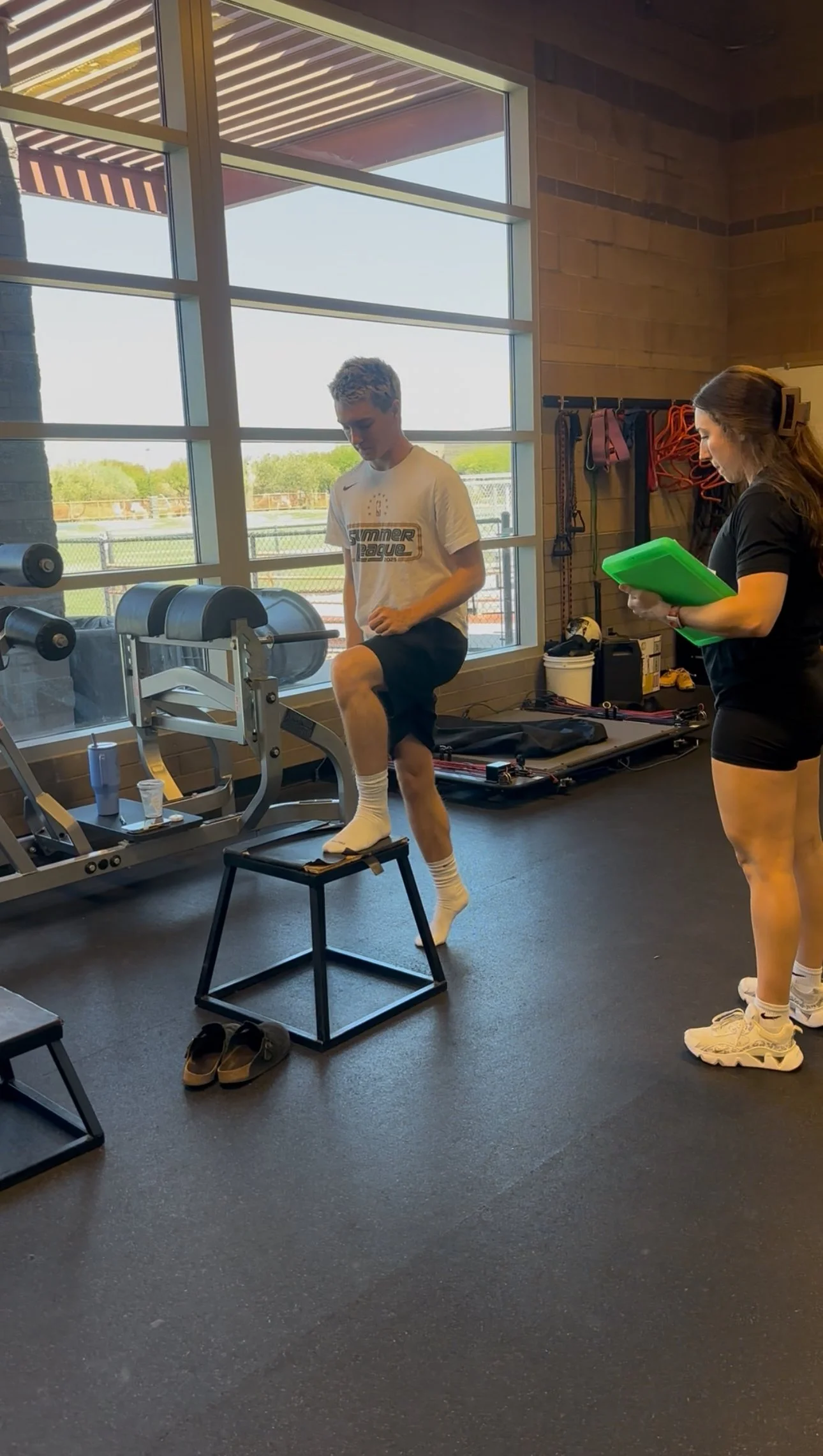
Movement Retraining Physical Therapy in Scottsdale & Arcadia
1-on-1 Movement Assessment for Athletes, First Responders, and Active Adults

If your injury keeps coming back every time you return to training, the problem probably isn't the tissue. It's how your body is moving.
At Corrective Physical Therapy, we help athletes, first responders, and active adults in Scottsdale and Arcadia identify and correct the movement patterns driving their pain, so they can train harder, perform better, and stop repeating the same injuries.
What Is Movement Retraining?
Movement retraining is the process of identifying faulty movement patterns…the compensations, imbalances, and mechanical breakdowns your body has developed over time…and systematically correcting them through targeted exercise, coaching, and progressive loading.
It's not stretching. It's not generic strengthening. It's teaching your body to move the way it was designed to, under the specific demands of your sport, your training, or your job.
At CPT, movement retraining is built into almost every treatment plan we create because in most cases, pain isn't just a tissue problem. It's a movement problem.
Why Movement Patterns Matter More Than Most People Realize
Your body is incredibly good at finding a way to get the job done. When something hurts, it compensates. When a muscle isn't firing correctly, another one picks up the slack. When a joint is stiff, the one above or below it moves more to make up the difference.
In the short term, these compensations are protective. In the long term, they become the source of the next injury.
This is why so many athletes and active adults end up dealing with the same problem repeatedly or develop a new injury in a different location after the first one "heals." The compensation pattern that developed around the original injury never got addressed. The body just learned a new way to move...and that new way eventually breaks something else.
Movement retraining is how we interrupt that cycle.
Rehab vs. Training: Understanding the Difference
One of the most important distinctions we make at CPT, and one that most clinics never explain clearly, is the difference between rehab and training.
They can look similar from the outside. But how they're implemented is completely different.
Rehab is about rebuilding tissue tolerance, restoring movement patterns, and retraining the nervous system. Training is about building capacity, increasing load, and improving performance.
The mistake we see constantly is people jumping from "I'm hurt" straight to "I'm back to full training" — skipping the middle entirely. They feel better, they go back to what they were doing, and they get hurt again. Sometimes within weeks.
The opposite happens too. People stay in rehab mode indefinitely…light loads, easy movement, never actually returning to what they love. They're technically "doing PT" but they're not getting anywhere.
The answer is a bridge. Progressive loading that takes you from pain...to tolerance...to performance. That's exactly what we build at CPT.
When Movement Retraining Needs to Come First
Here's something worth understanding before you ever do a single corrective exercise: if your nervous system is too sensitized or your tissue too irritated to tolerate movement, retraining won't stick.
The nervous system needs to feel safe before it can learn new patterns. When pain levels are high or irritability is significant, the body holds onto its compensations even harder because those patterns feel protective.
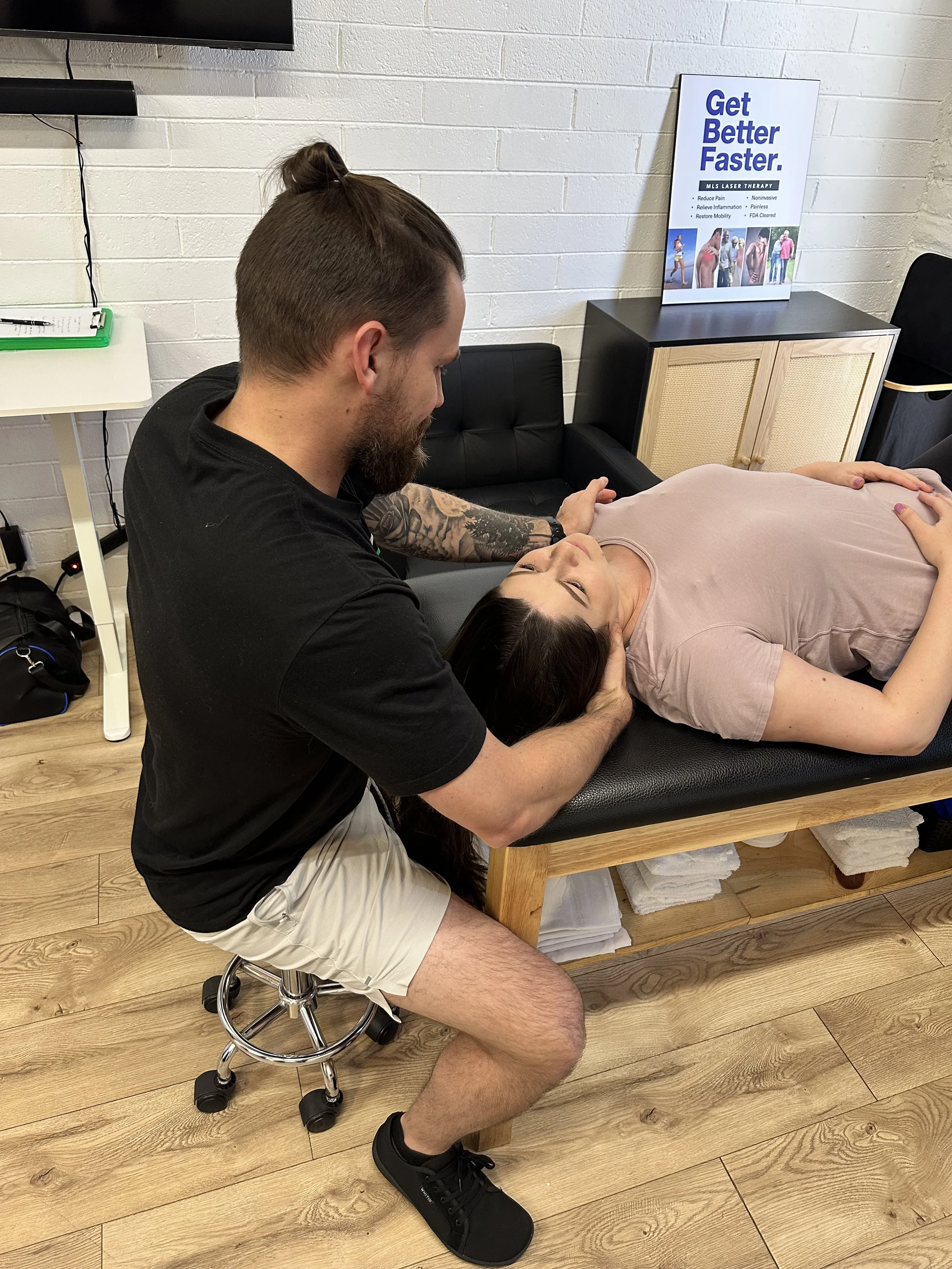
This is why at CPT, movement retraining is often preceded by hands-on treatment, dry needling, or laser therapy first. These aren't just pain management tools. They create short-term changes in the nervous system that allow the body to actually absorb and retain the movement changes we're working toward.
Manual therapy opens the door.
Dry needling reduces the muscular tension that's reinforcing faulty patterns.
MLS laser therapy calms irritated tissue so it can tolerate load.
Once the nervous system has a little more room to work with, movement retraining becomes significantly more effective and the changes actually last.
What Movement Retraining Looks Like at CPT
Movement retraining at Corrective Physical Therapy isn't a generic exercise program. It starts with a thorough movement assessment. We watch how you actually move under the specific demands that are causing your problem and build from there.
Depending on your condition, your goals, and what we find in the assessment, movement retraining may include:
-
Squat, Hinge & Lift Mechanics
For patients dealing with low back pain, hip pain, or knee pain, we assess and retrain how you squat, deadlift, hinge, and carry load. Small breakdowns in these patterns…a knee that caves, a pelvis that tilts, a hip that doesn't load correctly…create enormous cumulative stress over thousands of repetitions in the gym or on the job.
-
Running & Gait Retraining
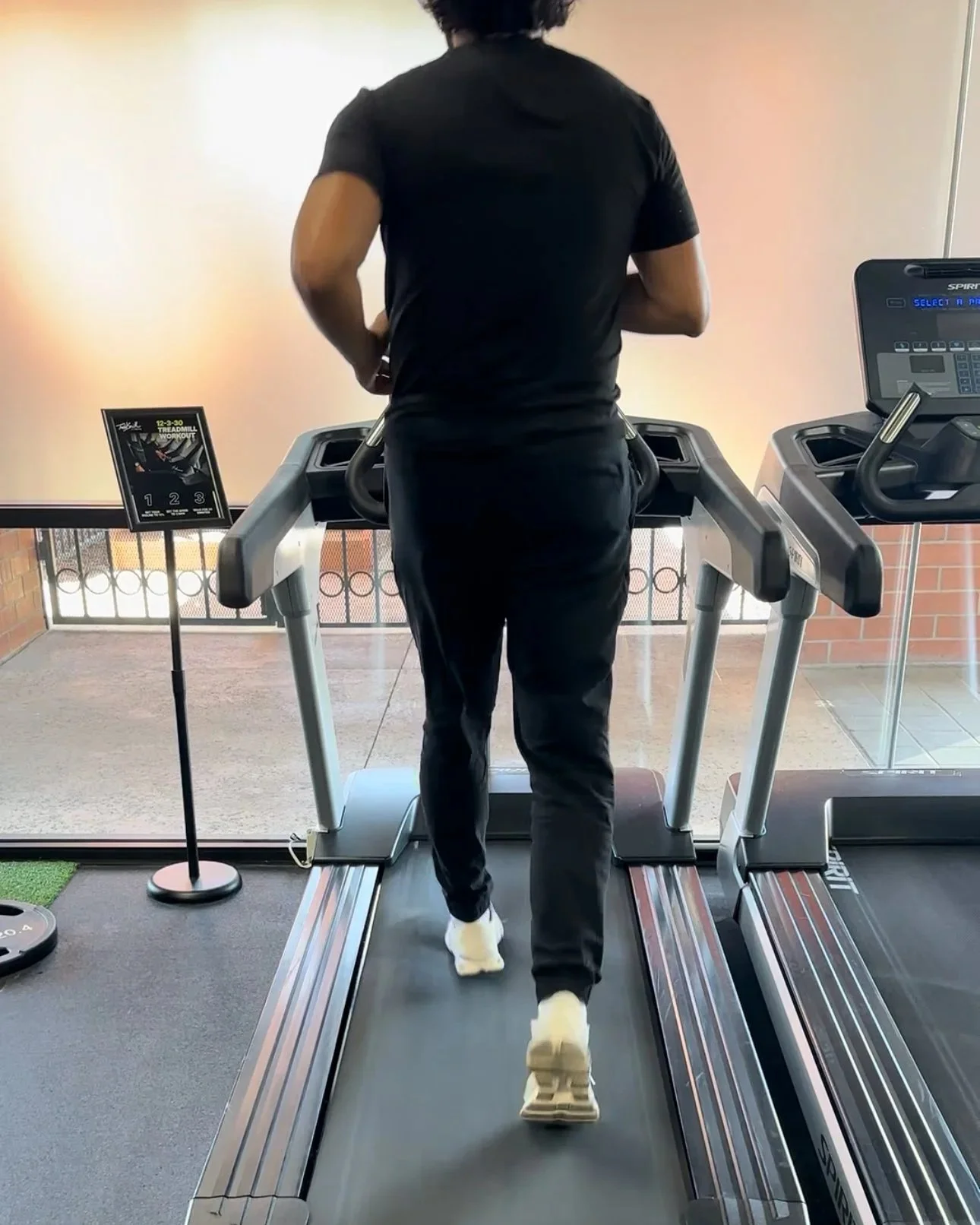
For runners and athletes, we analyze how you run, where force is being absorbed, and what mechanical inefficiencies are driving your pain or limiting your performance. Cadence, foot strike, hip control, pelvic stability, arm swing — all of it influences how your body handles the stress of running over time. For runners who want a deeper dive, our full Running Analysis pairs gait data with objective performance testing for a comprehensive picture.
-
Landing & Impact Mechanics
For athletes returning from lower extremity injuries, how you land matters as much as how you jump. Poor landing mechanics place enormous stress on the knee, ankle, and hip. These are one of the most common contributors to re-injury after return to sport. We retrain landing strategy, single-leg stability, and impact absorption before reintroducing explosive movement.
-
Rotational Control & Athletic Movement
Cutting, changing direction, rotating through a swing or throw…these movements require coordinated control through the hip, core, and lower extremity that strength training alone doesn't always address. We assess and retrain rotational mechanics for athletes whose sport demands multi-directional movement.
-
Plyometric Progressions for Return to Sport
For former athletes and active adults returning from injury, jumping straight back into explosive movement without a plan is one of the most reliable ways to get hurt again. We use structured plyometric progressions — starting with controlled, low-impact movements like banded pogos and box jumps — to retrain the body to handle impact, build confidence in explosive movement, and bridge the gap between rehab and full performance. It's not just about being pain-free. It's about being ready for the actual demands of your sport.
-
Posture & Load Distribution
For patients whose pain is driven by how they sit, stand, or carry load throughout the day, including first responders and active adults with physically demanding jobs, we address the postural habits and movement patterns that accumulate into injury over time.
Conditions Where Movement Retraining Plays a Key Role
Movement retraining is a core component of treatment for nearly every condition we see at CPT. It's particularly essential for:
Running injuries
Golf, pickleball, and sport-specific pain
CrossFit and weightlifting injuries
Sports and overuse injuries
Any injury that keeps coming back after "healing"
Why Patients Choose Corrective Physical Therapy
Most physical therapy clinics are built for volume. You get 20 minutes with a therapist, get handed off to an aide, and go home with the same exercise sheet they've been handing out to everyone else since 1998.
That's not how we work.
What Makes CPT Different?
1-on-1 treatment sessions

Sports rehab expertise

¡Sí, hablamos español!

Full 60-minute evaluations

Focus on active adults and former athletes

Education that helps you understand your pain

Personalized rehab plans

Evidence-based treatment

Locations in Scottsdale & Arcadia
Physical Therapy & Movement Retraining in Scottsdale & Arcadia, AZ
Corrective Physical Therapy provides personalized, 1-on-1 physical therapy and movement retraining for athletes, first responders, and active adults dealing with recurring injuries, movement dysfunction, and performance limitations in Scottsdale and Arcadia, Arizona.
Whether you're trying to get back to your sport, return to training, or just move through your day without the same thing breaking down over and over, our team is here to identify what's actually driving the problem and build a plan to fix it for good.
Because at Corrective Physical Therapy… We don't fix fragile. We build resilient.

Meet the Doctors

Dr. Matthew Brown PT, DPT, SCS
Dr. Matthew Brown is a sports physical therapist who helps active adults and athletes recover from injuries, improve performance, and return to the activities they enjoy. As the founder of Corrective Physical Therapy, he combines advanced sports rehabilitation training with strength and movement-based treatment to address the root cause of pain and keep patients performing at their best.
Founder & Performance Specialist
Dr. Daniel Paredes, PT, DPT, CSCS
Physical Therapist | Sports Performance & Running SpecialistDr. Danny Paredes is a sports physical therapist who helps runners, athletes, and active adults overcome pain, improve performance, and return to training with confidence. Combining his background in strength and conditioning, competitive athletics, and evidence-based rehabilitation, he bridges the gap between rehab and performance to help patients move better and achieve their goals.
Movement Retraining FAQs
-
Most PT exercise programs focus on strengthening or stretching a specific area. Movement retraining focuses on how those muscles and joints work together during the actual movements that are causing your problem — squatting, running, landing, lifting, rotating. It's the difference between building a stronger quad and teaching your knee to track correctly every time you go down a flight of stairs or decelerate on the court.
-
Not at all. Movement retraining applies to anyone whose pain or injury is being driven or maintained by how they move — which is most of the patients we see. Whether you're a competitive runner, a firefighter, a weekend golfer, or someone who just wants to get back to the gym without hurting, movement patterns matter.
-
In most cases, because the movement compensation that developed around the original injury never got addressed. The tissue healed, the pain went away, and you went back to moving the same way you were moving before — which put the same stress on the same structures. Movement retraining interrupts that cycle by changing the underlying pattern, not just treating the symptom.
-
It depends on how ingrained the pattern is, how long you've been moving that way, and what activity demands you're returning to. Some patients see meaningful changes quickly once the right cues and exercises click. Others with more complex or longstanding patterns need a longer progressive program. The goal is always to get you to the point where the new pattern is automatic — not something you have to think about.
-
Yes, often significantly. Chronic pain is frequently maintained by movement compensations and nervous system sensitivity that keep the body in a protective state. Retraining movement patterns, combined with progressive loading and hands-on treatment where appropriate, can break that cycle and reduce pain levels that have been present for months or years.
-
Related but not the same. A running analysis is a specific, comprehensive assessment of your running mechanics paired with objective performance testing — built for runners who want a detailed breakdown of their stride and a data-driven plan to improve it. Movement retraining is the broader process of identifying and correcting faulty movement patterns across any activity — running, lifting, cutting, landing, or daily movement. For runners, retraining often happens within the context of a full running analysis. For everyone else, it's built into the treatment plan from the start.